
High Volatility Slots Explained: Fewer Wins, Bigger Ones
High volatility slots distribute payouts in fewer, larger bursts rather than steady trickles. Choosing high volatility means accepting longer quiet stretches in exchange for feature rounds with higher win potential.




Published September 9, 2026
Volatility is the most useful number on a slot that most players never look at. It does not tell you whether a game is generous. It tells you what shape the generosity takes, and that shape determines whether a session feels like steady progress or long, quiet stretches broken by something substantial.
This guide covers what high-volatility slots actually do differently, what a session on one realistically looks like, and the misconception that costs players the most: assuming high volatility means a worse game. Casino Click's own lobby data settles that one directly.
High Volatility Slots at a Glance
- What it measures: How wins are distributed, not how much is returned.
- High volatility: Fewer wins, larger when they land.
- Medium volatility: More frequent wins, smaller on average.
- Not the same as RTP: Two separate numbers measuring two different things.
- No difficulty setting: Volatility describes the game's design, not its odds against you.
What Volatility Actually Measures
Volatility, sometimes called variance, describes how a game's returns spread over time. A low- or medium-volatility slot distributes wins in smaller, more frequent amounts. A high-volatility slot holds back more of its value for rarer, larger outcomes.
The keyword is distribution. Volatility says nothing about the total amount a game returns over the long run. That is an entirely separate figure, and conflating the two is where most confusion starts.
A useful way to picture it: imagine two games that return the same amount over a million spins. One delivers that in a steady trickle of small wins. The other stays quiet for long stretches, then delivers in bursts. Same total, completely different experience. That difference is volatility, and it is the single biggest factor in how a session feels.
The word "risk" is often associated with high volatility, and it is worth being precise about what that means here. It refers to variance in outcomes, the unpredictability of when wins arrive.
On a social casino platform, where you play with virtual coins rather than putting your own money on the line, the financial exposure that the term usually implies is not part of the equation. What varies is the session's rhythm, not what it costs you.

Start Your Social Journey
Register today to receive daily login coin rewards and start exploring top high-volatility social slot titles.
The Two Things Volatility Combines
Volatility is not really one measurement. It is the relationship between two, and separating them makes the whole concept easier to read.
- The first is hit frequency, meaning how often a spin produces any win at all.
- The second is win size, meaning how much those wins are worth relative to your play level when they arrive.
A game can be built with high frequency and small sizes, or low frequency and large sizes, and volatility is the label describing where a game sits on that trade.
This is why a game's feature list often tells you which bracket it will fall into before you check the rating. Mechanics that multiply unpredictably, or that concentrate value into a bonus round rather than the base game, push a title toward high volatility almost automatically. Random multipliers, escalating bonus features, and games where the headline mechanic only fires occasionally all work this way.
Mechanics that spread value out do the opposite. A game built around frequent modest wins in the base game, with a bonus round that supplements rather than dominates, will usually land as medium. Reading a feature list with that in mind means you can often guess the volatility rating before you see it, and you will be right more often than not.
Volatility and RTP Are Not the Same Thing
Here is the misconception worth killing, and Casino Click's lobby data kills it cleanly.
The assumption goes like this: high volatility games must return less overall because they pay out less often. Players see "high volatility" and read it as a warning label.
Look at what the Casino Click slots lobby lists. Octopus and Pearl Bonus carries an RTP of 96.45% and is rated high volatility. Star Kittyzens sits at 96.33%, with high volatility. Meanwhile, Joxer is listed at 92.00% and rated medium, and Le Bandit at 92.17%, also medium.
The two highest RTP figures in that lineup are both from high-volatility games. The two lowest are both medium-volatility. If volatility told you anything reliable about total return, that pattern would run the other way.
Those figures come from the lobby listing, and individual games sometimes state their RTP to a slightly different decimal on their own information screen. The gap here is roughly four points, so a fraction either way changes nothing about the point. It is still worth opening a game's own screen if you want its exact number.
What this means practically is that the two numbers answer different questions. RTP tells you roughly how much a game returns over a very long run. Volatility tells you how that return arrives. Reading them together gives you a real picture. Reading either alone gives you half of one.
Multiplier Trap Heist Action

Spin through a feature-rich urban landscape with cascading reels, golden coin reveals, and steady medium-volatility returns.
Spin Le BanditWhat a High Volatility Session Looks Like
Knowing the theory is one thing. Knowing what to expect on screen is another.
- Longer quiet stretches. This is the defining feature. Runs of spins without a meaningful win are normal on these games and are not a sign that anything is wrong. They are designed to work as intended.
- Bigger swings when features land. The value held back during quiet periods is concentrated into the moments when bonus features trigger. When something does land, it tends to matter.
- Feature triggers carry more weight. On a medium-volatility game, a bonus round is a nice addition to a steady stream of base game wins. In a high-volatility game, features are often where most of the session's value lies.
- Results vary more between sessions. Two sessions of the same length on the same high-volatility game can look completely different. That spread is wider than on medium-volatility titles, by design.
None of this makes outcomes more or less likely in your favor. It changes the pattern, not the mathematics.
One practical consequence of that wider spread is worth naming. In a high-volatility game, a short session is a poor sample of what the game does. You could play through a quiet stretch and see almost nothing, or catch a feature early and see a great deal, and neither tells you much. Medium volatility titles give you a more representative picture in less time.
Four High Volatility Slots on Casino Click
All four of these are listed as high volatility in the lobby, with their published RTP figures.
Octopus and Pearl Bonus carries the highest listed RTP of the group at 96.45%, built around wilds, scatters, and multipliers. It is the clearest counterexample to the idea that high volatility means low return.
Star Kittyzens sits close behind at 96.33%, with free games, random multipliers, and a stacked wild. The random multiplier element is characteristic of the category, since a mechanic that can multiply unpredictably is exactly what produces the larger, rarer outcomes.
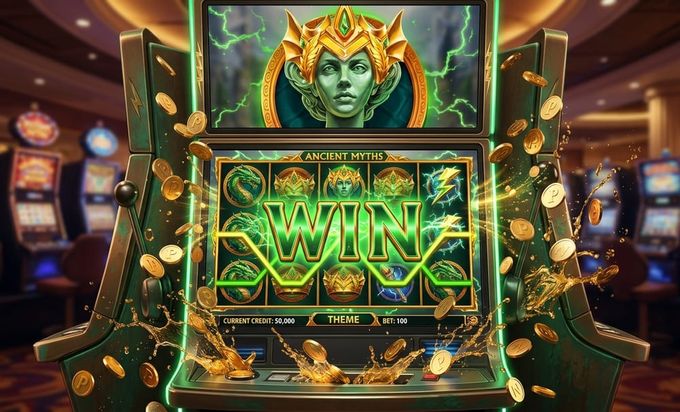
Medusa's Fury is listed at 94.00%, with wild symbols and reward rounds. A slightly lower RTP than the two above, on the same volatility rating, which again shows the two figures moving independently.
Max Catch is also listed at 94.00%, built around a fish multiplier and wild symbols. Multiplier-driven games like this concentrate value in specific moments rather than spreading it evenly, which is the structural reason they fall into the high-volatility bracket.
For contrast, Raiders of Atlantis is rated medium at 92.00%, running three moving wilds alongside two separate free spins features. Joxer sits at the same 92.00% rating, also medium, built on a Hold-and-Roll reward with wilds and scatters. Same lobby, same three providers, noticeably different rhythm from the four above.
That contrast is the useful part. These are not lesser games, and their lower RTP is not a consequence of their volatility rating. They are simply built to spread their value differently, which makes them a better fit for a shorter session or for a player who would rather stay active than wait.
Choosing Volatility to Suit the Session
Since volatility describes experience rather than value, the sensible way to choose is based on what you want from the time you are spending.
High volatility suits players who enjoy anticipation, do not mind quiet periods, and want feature triggers to feel significant. If a steady stream of small wins bores you, this is the category for you.
Medium volatility suits shorter sessions, players who want more regular activity, and anyone who finds long dry stretches frustrating rather than tense.
The practical approach is to check both numbers before you open a game. The lobby lists volatility and RTP side by side, so it takes seconds. If you want a game that stays active, look for a medium. If you want one where the bonus round is the main event, look for high volatility, then use RTP to choose between the high-volatility options rather than treating them as interchangeable.
One thing worth saying clearly: volatility is not a difficulty setting, and it is not something you can play around. It describes how the game was built. No approach to a high volatility slot makes the quiet stretches shorter, and a long run without a win does not mean anything is owed. Every spin is independent of the one before it.
Reading the Numbers Before You Spin
High volatility slots are not riskier games in any sense that cost you more. They are games that distribute their returns differently, holding back value for rarer, larger moments rather than spreading it thin.
The takeaway that matters most is that volatility and RTP are separate. Casino Click's own lobby lists high-volatility games at 96.45% and 96.33%, and above-medium-volatility titles at 92.00% and 92.17%. Judge a game on both figures rather than assuming one tells you about the other.
Play whichever rhythm you actually enjoy, decide how long a session should run before you start, and treat it as entertainment. Outcomes are random, and no pattern of results predicts the next one. Play is restricted to those 18 and over, and responsible social gameplay guidance is available if you want to set limits on your account.
Browse the full range at Casino Click and check the volatility rating before your first spin.
FAQs
Do high volatility slots have worse odds?
No. Volatility describes how wins are distributed, not the total a game returns. Some of the highest RTP games in the Casino Click lobby are rated high volatility.
What does high volatility mean for my session?
Expect longer stretches without a meaningful win and larger outcomes when features do trigger, compared to a medium-volatility game.
Is high volatility the same as high risk?
It refers to variance in outcomes rather than financial exposure. On a social casino platform, you are playing with virtual coins, so what varies is the rhythm of the session.
Can I do anything to reduce volatility on a slot?
No. Volatility is fixed by the game's design. The only choice available is which game you play.
How do I check a slot's volatility?
The Casino Click slots lobby lists volatility alongside RTP and key features, so you can compare games before opening one.