Progressive vs. Non-Progressive Jackpots: Which Slots Pay Bigger?
Progressive jackpots offer growing prize pools with higher top-end potential, while fixed jackpots deliver stable, predictable multiplier payouts. Choosing between them comes down to whether you prefer uncapped jackpots or higher overall base game returns.




Published September 9, 2026
Two slots can both advertise a jackpot and be running completely different prize structures underneath. One builds a pool that climbs until somebody takes it. The other pays a number that was decided before the game ever launched. They look similar on the reels, and they feel similar to play, but what you are actually chasing is not the same thing.
This guide covers what separates progressive jackpot slots from fixed ones, why the difference affects your session more than most players realize, and how to work out which type you are playing in about ten seconds. There is also one specific trap worth knowing about because it regularly catches experienced players.
Progressive vs Fixed Jackpots at a Glance
- Progressive: The prize grows as play continues, with no set ceiling.
- Fixed: The prize is a set multiplier of your play level and never changes.
- The tell: Progressives show a climbing number. Fixed prizes show an x figure.
- The trap: MINI, MINOR, MAJOR, and GRAND tiers are usually fixed rather than progressive.
- The other trap: A "progressive multiplier" is a feature mechanic, not a jackpot.

Start Your Social Session Today
Register your account to unlock daily reward coins and jump into both progressive and fixed jackpot social slots.
What a Progressive Jackpot Actually Is
A progressive jackpot is a prize pool that accumulates over time. In games built this way, a portion of ongoing play feeds into a shared pot, and that pot keeps climbing until somebody triggers the win. Once it is claimed, the pool resets to its starting value and begins rebuilding.
The defining feature is the absence of a cap. Nobody can tell you what a progressive jackpot will be worth when it lands, because that depends entirely on how much play went into it beforehand. This is why the biggest headline prizes in the industry come from progressive games. A pool that has been building for months across a large player base can reach a size no fixed prize could match.
The trade-off is straightforward. Prize money that goes into the pool is not returned through normal play, so progressive games tend to have a lower base game return than comparable titles without one. In practice, that means longer gaps between ordinary wins. You are trading steady returns for a shot at something with no ceiling, and the odds of reaching that ceiling are very long.
There is a second consequence worth understanding. Because the pool builds from collective play, a progressive prize is not tied to your play level in any direct way. The number on the screen is the same as the one every other player is looking at.
What a Fixed Jackpot Actually Is
A fixed jackpot is a set multiplier of your play level. The game decides in advance that the top prize is worth, say, 5,000 times whatever you are playing at, and that relationship never changes. Play higher, and the potential prize scales up with you. Play lower, and it scales down.
This structure has real advantages. The prize is predictable; you can work out exactly what a top hit would be worth at your chosen play level, and because no money is being siphoned into a growing pool, the base game usually returns more during ordinary play. Sessions tend to feel steadier.
The Oracle's Fortune is a clean example of how this looks in practice. The game runs four bonus prize tiers labeled GRAND, MAJOR, MINOR, and MINI, and the paytable states plainly that these are a fixed multiplier of the play level. The four multipliers in play are 5,000x, 200x, 50x, and 10x, and the game's overall maximum win is 5,000x. All four tiers are eligible at any play level, so there is no minimum play requirement that gates access to the bigger prizes.
That last detail matters. Some jackpot games do restrict their upper tiers to higher play levels. When a game states that every tier is available at every play level, that is genuinely useful information about how you can approach it.
The rest of the game is built around multiplier hot spots rather than a growing pool. Five land every spin, they may shift position each spin, and any landing on a winning line multiplies it, with values on the same line added together first. The paytable notes that they multiply only line wins, not instant prizes.
Discover Mystic Fixed Jackpots
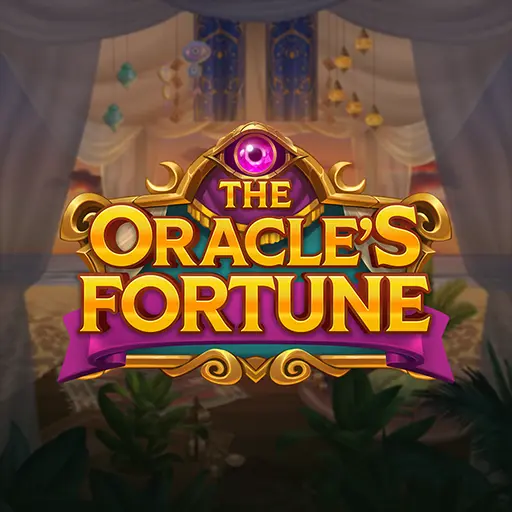
Take a spin on a spellbinding slot where four fixed jackpot tiers scale directly with your active play level.
Play Oracle's Fortune SlotThe Tier Names Are Not a Reliable Signal
Here is the trap. MINI, MINOR, MAJOR, and GRAND are the visual language of jackpot slots, and most players read those four escalating labels as meaning progressive. They usually do not.
In the Oracle's Fortune example above, all four tiers are fixed multipliers. The labels describe a hierarchy of prize sizes within the game, not four accumulating pools. The presentation borrows heavily from progressive design, with the same tiered layout and the same escalating color scheme, but the underlying structure is completely different.
This is not a criticism of the games. Tiered fixed prizes are a good structure, and giving each tier a name is clearer than showing four bare numbers. The problem is that players carry an assumption across from progressive games and end up expecting a prize that grows when they are actually playing for one that does not.
The fix is simple. Do not read the tier names. Read what the paytable says the tiers pay.
"Progressive" Does Not Always Mean Jackpot
There is a second place the word turns up, and it means something else entirely.
Year of the Horse runs a free spins round with what it calls a progressive bonus multiplier, climbing to a maximum of x150. That multiplier does step upward as the round continues, so the word is being used accurately. But it describes a feature that builds up within a single bonus round, not a prize pool shared among players. When the round ends, the multiplier resets. Nothing carries over, and nothing accumulates across sessions.
This is common terminology across the industry. Progressive multipliers, progressive wilds, and progressive free spins all describe mechanics that escalate during play. None of them is a progressive jackpot. If you see the word attached to a multiplier or a feature rather than to a prize pool, it is a mechanic.
The distinction is not academic. Read that x150 figure as a jackpot, and you will sit through a base game waiting for something that only ever appears inside the free spins round.
Experience Escalating Feature Action

Jump into action across 243 ways to win and trigger a free spins bonus round with a progressive multiplier reaching up to x150.
Spin Year of the HorseSo Which One Pays Bigger?
Progressives pay more at the top. Non-progressive games pay bigger everywhere else. Both halves matter.
A progressive has a higher ceiling by definition, because it has no ceiling. If you are ranking these purely on the size of the single largest prize either one can produce, progressives win, and it is not close. Nothing capped competes with something uncapped.
But top prizes are not what most sessions consist of. The prize that actually shapes your session is the ordinary win, arriving at ordinary intervals, and that is where non-progressive games have the edge. The prize value that goes into building a pool is value that is not coming back through normal play, so a progressive title generally runs a lower base game return than a comparable game without one. Play a long session on each, and the fixed title will usually have paid you more in total, while the progressive will have paid you less in exchange for a lottery ticket you almost certainly did not cash.
There is also a scaling factor that people miss. A fixed prize expressed as a multiplier grows with your play level. At a high play level, a 5,000x prize is a substantially different proposition than at the minimum. A progressive pool does not scale with you at all. Two players at very different skill levels are chasing the same progressive number.
So the honest ranking depends on what you are measuring. Biggest possible prize, progressives. Most value returned across a real session, non-progressives. If you want steadier play with prizes you can calculate in advance, fixed jackpot games suit that. If you specifically want a shot at something uncapped and you accept that ordinary wins will come less often, that is what progressives are for. Both are entertainment. Neither is a strategy.
One thing worth stating clearly, because it is the most persistent myth in this whole category: a jackpot that has not landed in a long time is not due. Every spin is independent of every spin before it. A pool that has been building for months has exactly the same chance of dropping on your next spin as one that reset yesterday. Nothing accumulates in your favor.
How to Check Which Type You Are Playing
Open the game info or paytable screen before you start. It settles the question in seconds.
- Look for x notation. A prize written as 5,000x or 200x is fixed. It is a multiplier of your play level.
- Look at the number shape. A progressive pool sits at an awkward place, accumulating values with decimal places. Fixed prizes land on round figures.
- Change your play level. This is the definitive test. A fixed prize scales up and down with your play level because it is a multiplier of it. A progressive pool shows the same value at every play level, because it belongs to everyone.
- Read the wording. Games carrying a genuine progressive generally say so on the jackpot screen.
Run that check once, and you will know exactly what you are playing for.
Know What You Are Chasing
The difference between a growing pool and a set multiplier changes what a session looks like, how often ordinary wins arrive, and what the top prize is actually worth to you at your play level. None of that is hidden. It is in the paytable, and the paytable is one tap away before your first spin.
Play both kinds, work out which pace you prefer, and treat the whole thing as entertainment rather than a plan. Outcomes are random, no structure gives you an edge over another, and losing sessions are a normal part of how these games work. Set limits before you start, take breaks, and remember that play is restricted to those 18 and over.
Want to see the difference for yourself? Browse the social slot games library and check a few paytables, or start from the Casino Click homepage.
Refill Your Social Balance

Pick up a Gold Coin store bundle to extend your social slot play and receive complimentary Sweeps Coins automatically.
Play Free SlotsFAQs
Are progressive jackpots better than fixed jackpots?
Neither is better. Progressives offer a higher ceiling with a lower base game return, while fixed jackpots usually return more during ordinary play with a capped top prize.
Do MINI, MINOR, MAJOR, and GRAND mean a slot is progressive?
No. Those labels describe a hierarchy of prize tiers and are frequently used on games where every tier is a fixed multiplier of your play level.
Is a jackpot more likely to land if it has not paid recently?
No. Every spin is independent, so a long gap since the last win does not improve the chance of the next one.
Does my play level affect the jackpot I can win?
With fixed jackpots, yes, because the prize is a multiplier of your play level. Some games also restrict upper tiers to higher play levels, so check the paytable.
What is a progressive multiplier?
It is a feature that climbs during a bonus round and usually resets at the end of the round. It is a game mechanic rather than a jackpot.